Event
Event

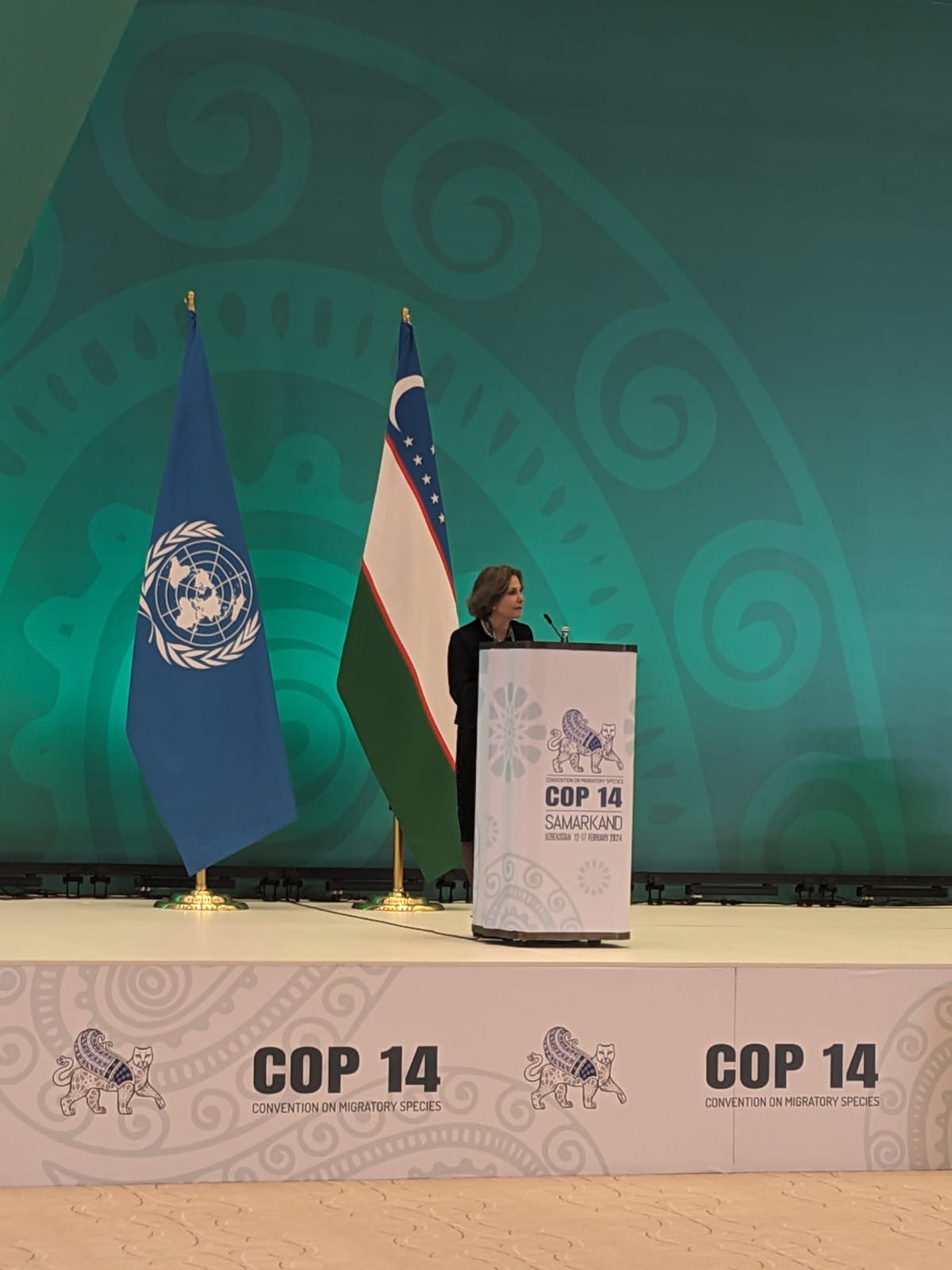
14th meeting of the COP at the Convention on Migratory Species

The 14th meeting of the Conference of the Parties to the Convention on the Conservation of Migratory Species of Wild Animals (CMS) is taking place from 12 to 17 February 2024 in Samarkand, Uzbekistan.
Background
The Convention on Migratory Species, also known as the Bonn Convention, was adopted in 1979 and came into force in 1983. It is the only global convention that comprehensively addresses all aspects of the conservation of migratory species, the habitats on which they depend, and migration routes.
The objective of CMS is to ensure the conservation of migratory terrestrial, aquatic and avian species throughout their ranges. It aims to increase cooperation between states to maintain and increase the ecological connectivity of transboundary habitats, transboundary protected areas as well as vulnerable ecosystems along the migration areas of specific species. In addition to adopting measures to protect endangered migratory species and their habitats (listed in Annex I), States Parties are invited to conclude agreements to preserve species whose conservation status is unfavorable or whose conservation may benefit from international cooperation (listed in Annex II).
Challenges of COP14 CMS

The 14th meeting of the COP CMS under the slogan “Nature Knows No Borders” is the first meeting of the governing body since the adoption of the Kunming-Montreal Global Biodiversity Framework in 2022 by the Convention on Biological Diversity.
This multilateral meeting is an opportunity to address a number of conservation priorities and new initiatives, including those concerning the implementation of the Global Framework. Habitat conservation and restoration issues, as well as threats to species such as overexploitation, habitat loss and fragmentation, pollution and climate change will be addressed by Parties to the Convention, stakeholders and scientific experts.
COP14 will make it possible to consider:
- The launch of the very first report on the state of migratory species in the world
- The adoption of the Strategic Plan for Migratory Species for the period 2024-2032
- New measures on light pollution and best practices for linear infrastructures to minimize impacts on migratory species
- Strategies for implementing the Global Biodiversity Framework and for strengthening synergies with other biodiversity conventions and processes
- Progress in the development of the atlas on animal migration
- Proposals for amendments to the annexes, the implementation and possible extensions of concerted actions for 9 species as well as new proposals for concerted actions for 7 species
A high-level segment took place on Sunday 11 February at the Congress Center in Samarkand with the presence, among others, of the Minister of Ecology of Uzbekistan, the Executive Secretary of CMS, the Executive Director of UNEP as well as the French Ambassador to Uzbekistan, among others.